Portfolio of Creative Work

Jacob Enfield, Ph.D.

Interactive media, games, and AI-assisted creative systems

jenfield76@yahoo.com
CV (PDF) · PaizoMath · YouTube · LinkedIn

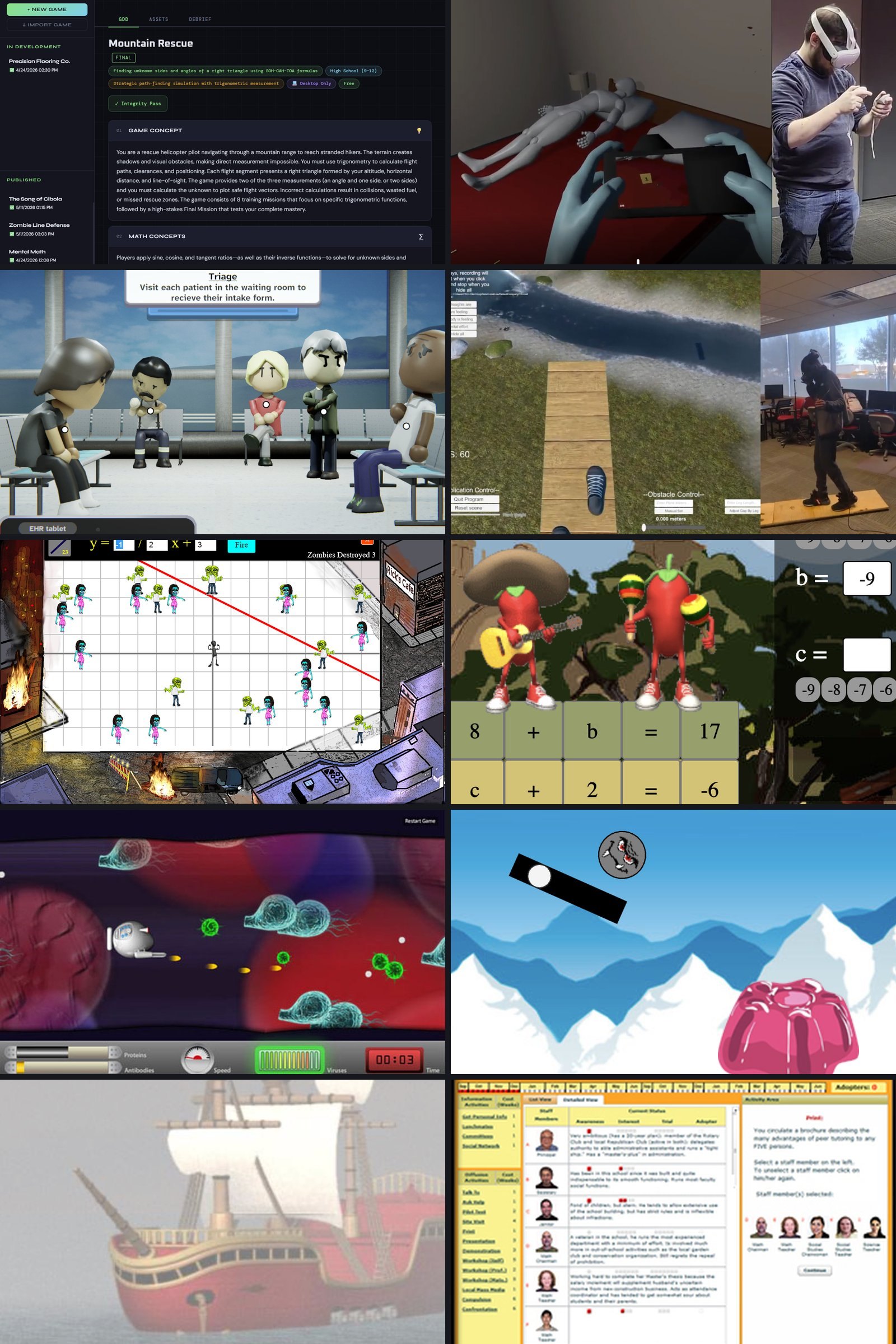
Collage of game and VR projects
Practice

Interactive systems for learning

I create interactive systems designed for human learning and improvement: games where the mathematics is integrated into the gameplay, an app that helps people improve their conversational skills, an AI coach that helps students learn to program, and immersive experiences built with partners across disciplines. My Ph.D. in Instructional Systems Technology, with a minor in Interactive Media (Indiana University), joined how people learn with how they play and interact, and that join has organized my work ever since.

Play as reasoning. Games where knowledge drives the core action and the player still has real choices to make.

Building with AI. AI as a production team I direct, as a conversation partner, and as a coach.

Immersive and interdisciplinary work. VR and games built with partners in nursing, kinesiology, and forensics, where the domain expert supplies the truth and I supply the experience.

Each project lists the design question it began with, what I made, my role, and where it went. Collaborators and student developers are credited by role throughout.

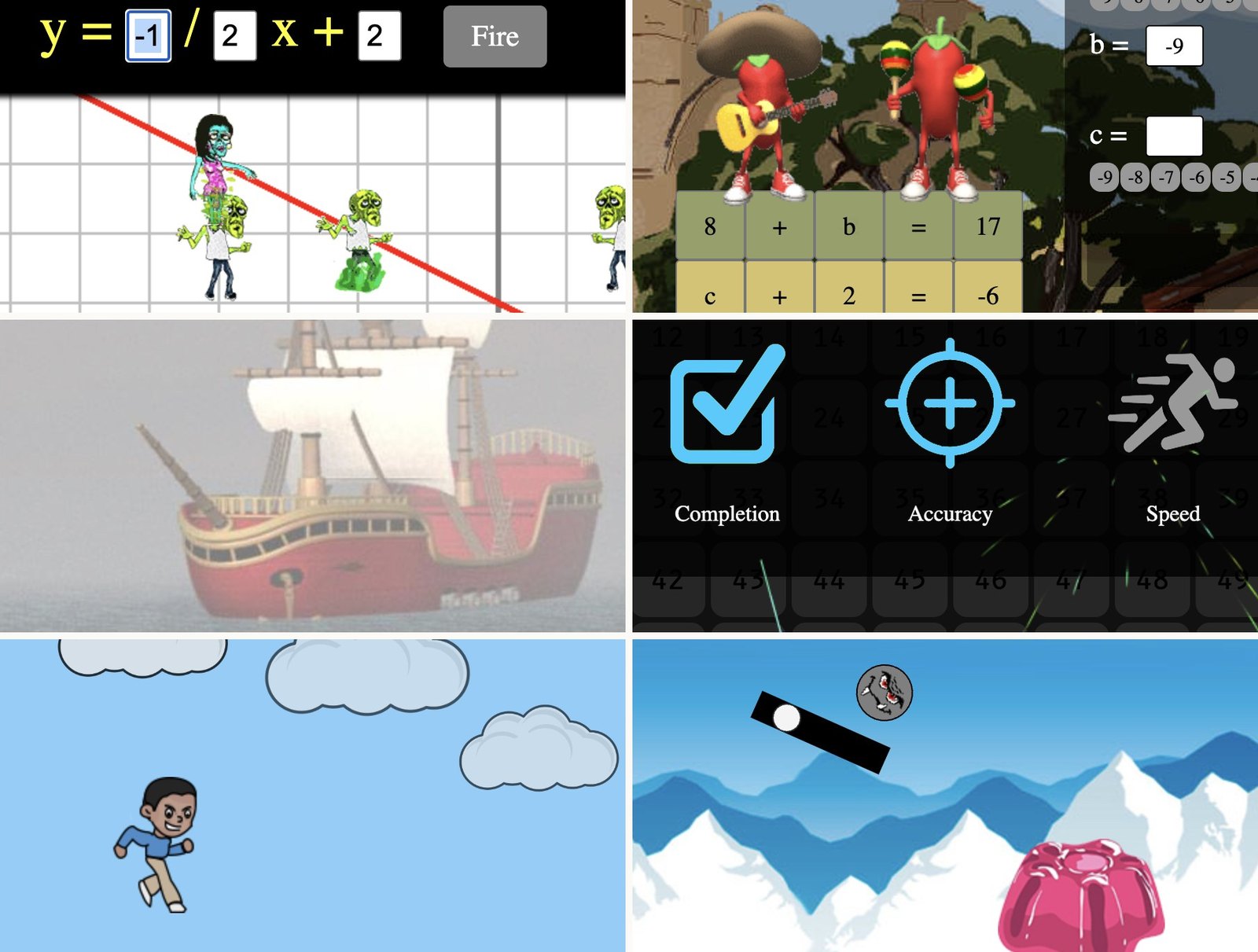
Zombie Line Defense, Song of Cibola, Pirate's Life, Mental Math, False Floors, Jello Monster
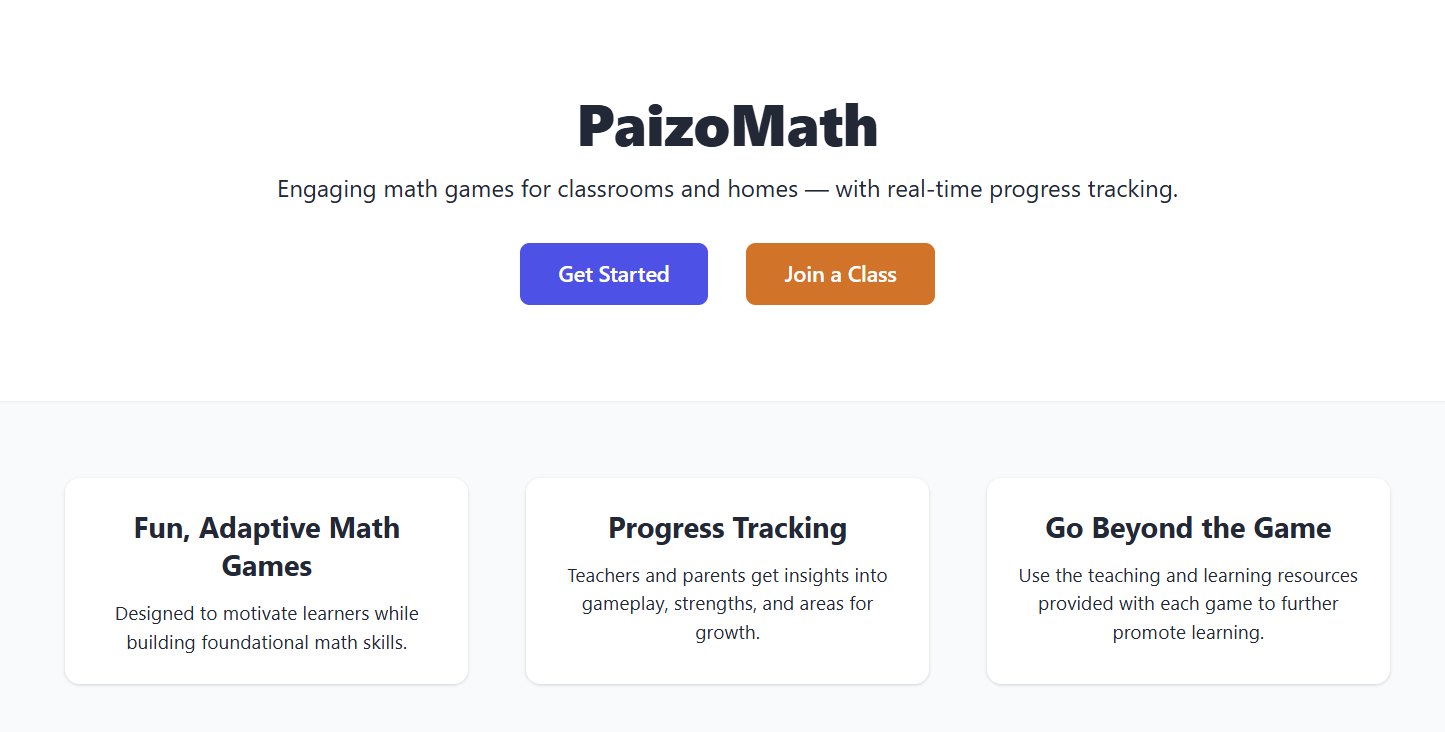
The PaizoMath homepage: games plus progress tracking for teachers and parents
01

PaizoMath

Year
2013 to present (relaunched 2025)
Form
Browser-based game platform, seven games
Role
Creator, designer, developer
Studio
Second Job Studios LLC

Can the mathematics be the game itself, rather than a toll gate in front of unrelated play?

PaizoMath is a platform of mathematics games for grades 6 to 12, built on two design principles I study. Integrated gameplay: mathematical reasoning drives the core action. In Zombie Line Defense you graph the line that stops the horde; in Pirate's Life plotting a point is how you dig for treasure. A strategic layer: being mathematically correct is necessary but not sufficient to win, so the player is making choices, not answering a quiz.

The games run from Zombie Line Defense (2013) through Pirate's Life (2014), Song of Cibola (2015), Mental Math (2019), False Floors (2020), Jello Monster, and Mountain Rescue (2026). Student and teacher accounts and a teacher dashboard wrap the games into one platform.

OutcomeSupported by a 2013/14 CSUN Research, Scholarship and Creative Activities award. An NSF STEM K-12 proposal (Co-PI Bill Watson, Purdue) is in preparation for early 2027.
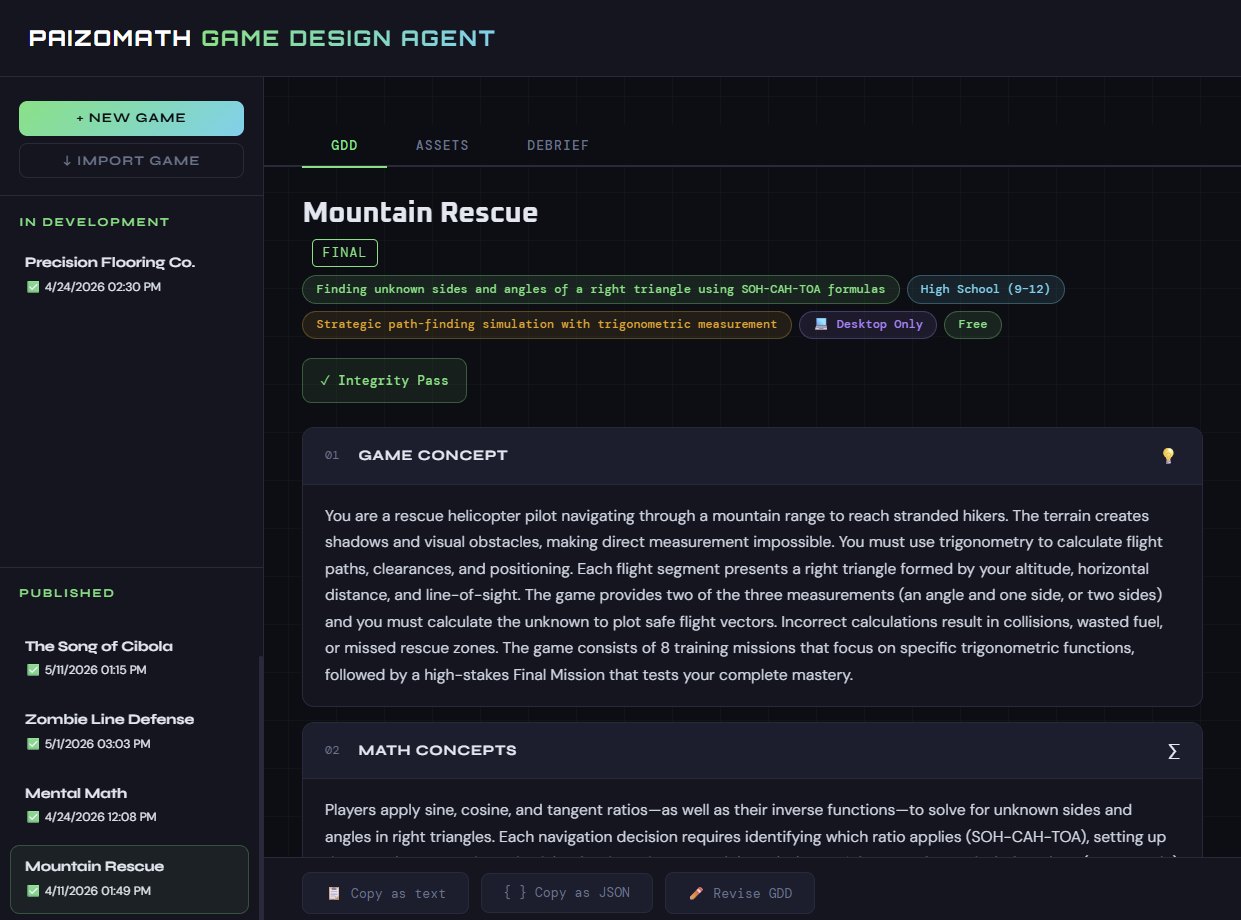
The Game Design Agent I built, showing the design document for Mountain Rescue
Mountain Rescue's integrity audit still flags the missing strategic layer; the game predates the rule
02

AI-Assisted Game Design and Development Pipeline

Year
2026
Form
Browser game (trigonometric functions); AI-collaborative production method
Role
Designer and director of a three-agent AI studio
Tools
Custom Game Design Agent, Claude, Claude Code

Can a designer direct a small team of AI collaborators to take a math concept to a sound, playable game in days rather than months?

I produce PaizoMath games through a pipeline of bounded AI roles under human design judgment: a consultant I think architecture through with, a Game Design Agent I built to a specification that turns a math concept into a design document while enforcing the platform's design rules, and an agentic developer that builds the working game from that document. Integrity checks against the design rules are built into the method.

Mountain Rescue was the first game through the pipeline, playable in about three days. It also wasn't fun. It had integrated gameplay but no strategic layer, so it played like a gated test. I knew that rule as a designer but had never written it down, so the agent had no way to apply it. I left the game on the platform unfixed, with its integrity audit still showing the failed check, as the record of a rule the process made me articulate.

OutcomePeer-selected solo workshop, AI-Assisted Serious Game Design: Concept to Launch, Serious Play Conference, Duke University (Aug 2026). An earlier version was an invited talk for Purdue University's College of Education (Apr 2026); full recording (73 min) on Purdue's channel at youtube.com/watch?v=I6SuLEtPzyg.
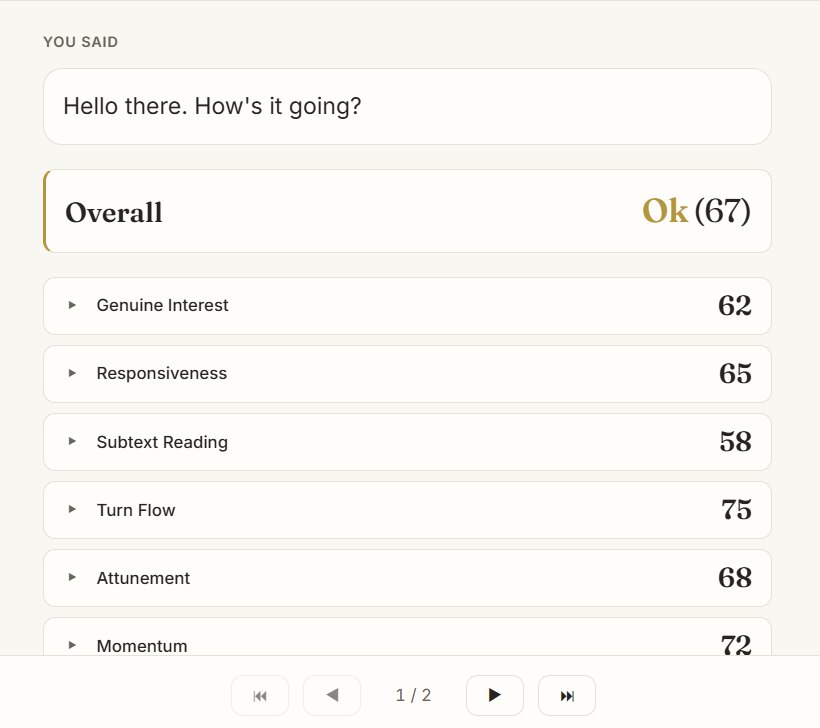
Per-turn scoring on six conversation competencies
convo_b
03

Convo

Year
2026, in active development
Form
Voice-driven AI conversation experience (Progressive Web App)
Role
Concept, interaction design, full-stack and AI architecture
Studio
Second Job Studios LLC

Can a person rehearse a hard conversation out loud, with a character who has something to hide, and see why each line landed the way it did?

The user sets a goal and speaks with an AI character who holds a hidden context the user must discover through behavior, not be told. Every utterance is scored against the user's own goal on six conversational qualities (genuine interest, responsiveness, subtext reading, attunement, momentum, turn flow). The user can pause, read the rationale, and swap in a stronger line to feel how it lands.

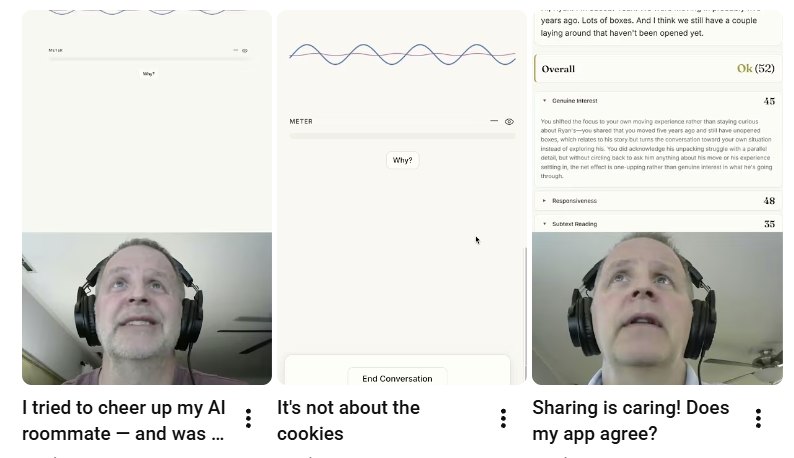
The design premise: people silently rehearse hard conversations all the time, but that never exercises the thing that actually fails, which is producing words under pressure while someone responds. Built on a real-time streaming voice pipeline with one model performing the character and another scoring and explaining.

OutcomeCompleted the NSF I-Corps regional program (2026) as a solo team, with 20 customer-discovery interviews. Now applying to the national NSF I-Corps Teams program, with a recent Computer Game Design graduate as Entrepreneurial Lead. Development is documented in a build-in-public video series (youtube.com/@jacobenfield).
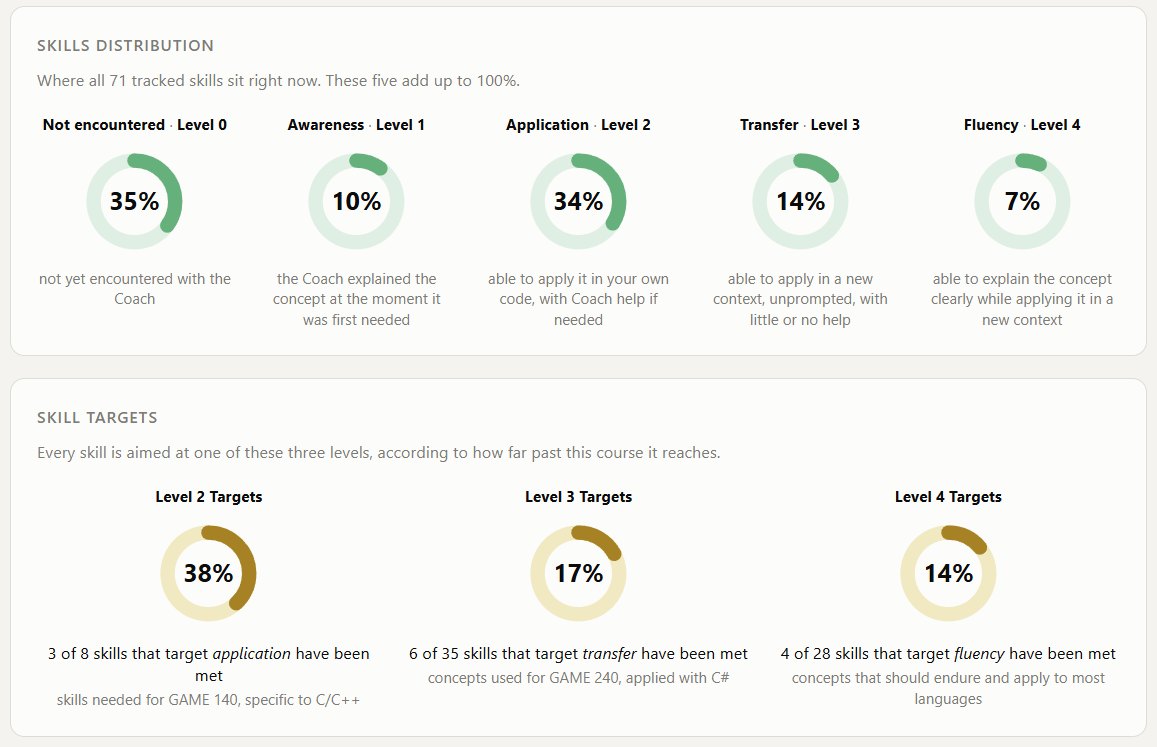
The Mastery Inventory Viewer (sample data): where all 71 skills sit, and progress toward each target level
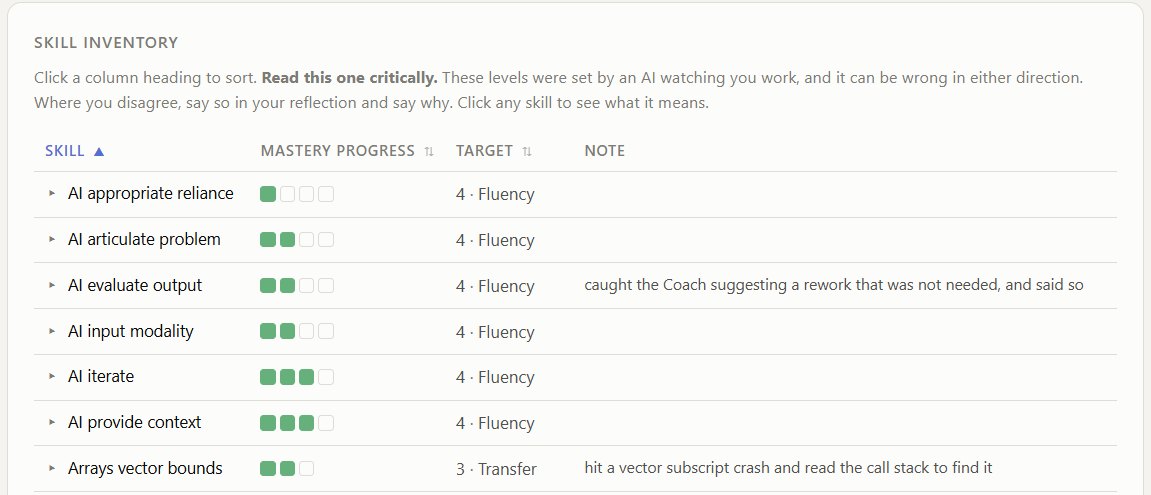
The skill inventory with the Coach's notes; students are told to read the AI's ratings critically
04

GAME 140 AI Coach

Year
2026, deployed August 24
Form
Human-AI interaction design: an AI coaching system for a programming course
Role
Sole designer and author
Context
~60 students, mostly art, design, and writing majors

How should an AI behave when the goal is for the human to do the work, and how do you design that behavior so it holds?

I replaced the video lectures in George Mason's introductory game-programming course with an AI coach I designed. It never writes student code; students type every line and must be able to explain it. It delivers concepts just in time, and it tracks 71 skills in a mastery inventory the student carries from unit to unit. Levels can fall as well as rise, and they are deliberately kept out of the grade so the record stays honest.

A companion Mastery Inventory Viewer, a single self-contained file that runs entirely on the student's own computer, renders that record: where every skill sits, the level it was aimed at, and the Coach's note on each. It makes no network calls and stores nothing, because sharing the record had already been made optional on privacy grounds. It shows growth from zero rather than distance from a ceiling, and it closes with a reflection a student can carry into an AI chat set up to interview them rather than write for them.

OutcomeLive in two sections from the first day of Fall 2026 classes. The end-of-course reflection is graded on completion only, so the self-assessment stays honest. Learning outcomes are not yet measured.
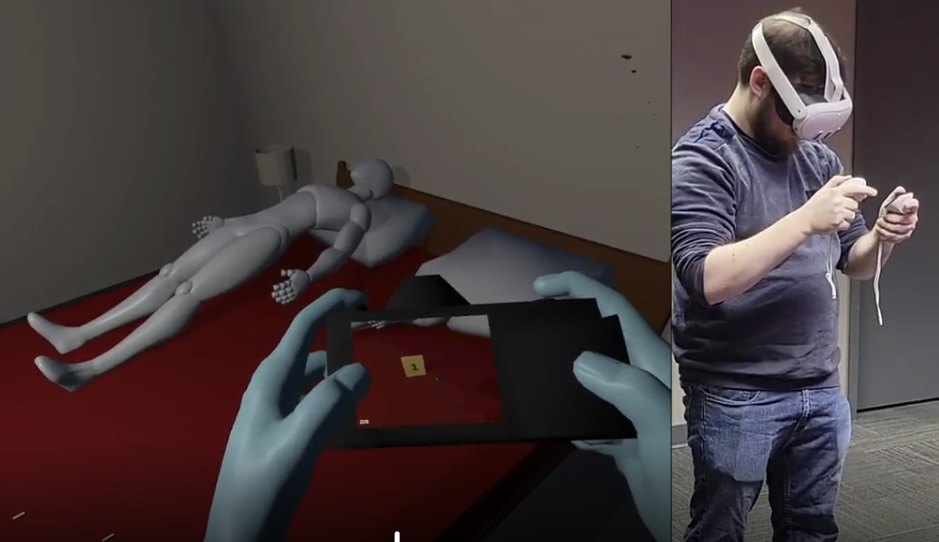
Photographing evidence in the virtual scene (left) with the headset in use (right)
05

Virtual Crime Scene

Year
Virginia Serious Game Institute, ongoing
Form
Virtual reality training environment
Role
Producer and supervising designer; directed the student development team
Partners
GMU forensics faculty and a GMU police officer

Can a learner practice processing a crime scene, with its sequence, care, and documentation, in a space they are free to get wrong?

A VR environment in which learners walk a virtual crime scene and process it with interactive investigative tools. Developed with forensics faculty and a GMU police officer, so the procedures and the scene come from practice rather than from a game designer's idea of an investigation.

I generated the project, recruited and supervised the student developers, and shaped the design with the subject-matter partners.

OutcomePrototype presented to George Mason University's Board of Visitors and showcased in live demos at ARTS by George!, the College of Visual and Performing Arts' annual scholarship benefit; a promotional video supports further fundraising. The demonstration also led directly to the nursing collaboration on the following pages.
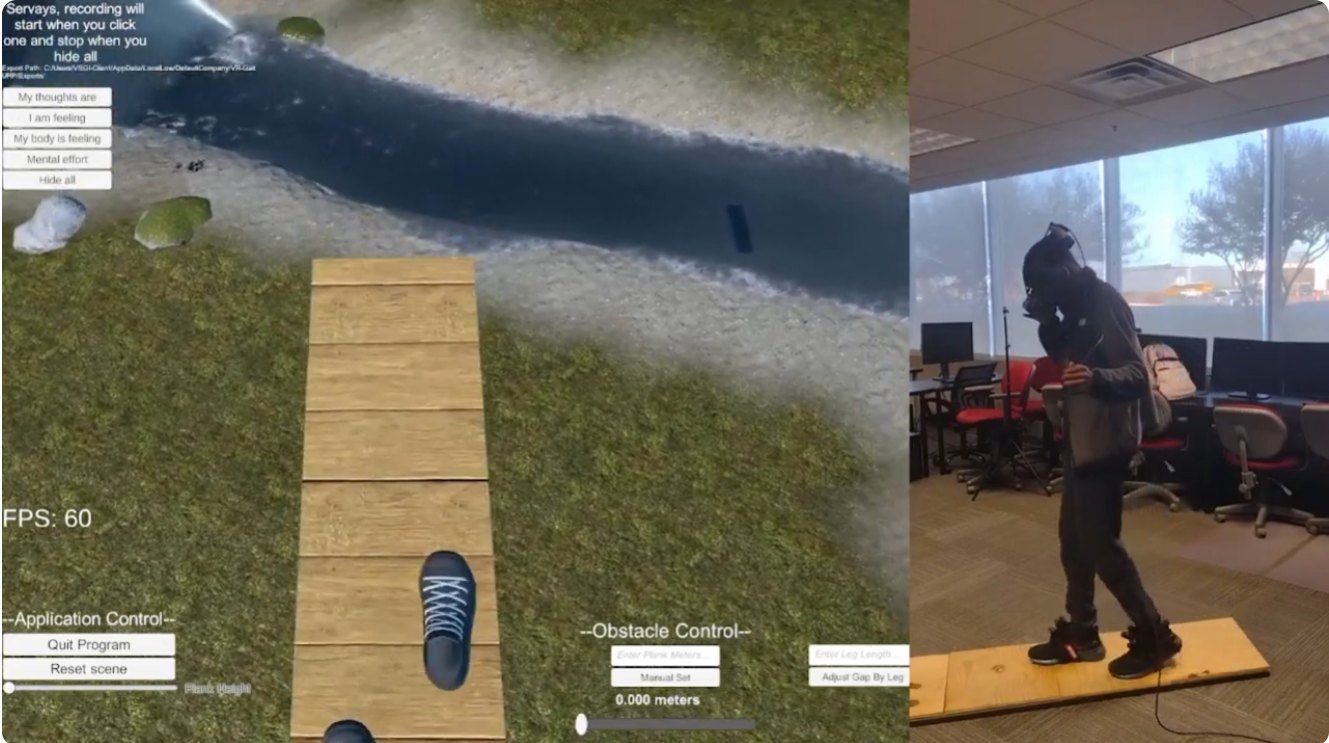
The VR walkway: participant view (left) and lab (right)
06

VR Gait Environment

Year
2024
Form
Virtual reality environment for a kinesiology experiment
Role
Supervising developer; directed the student team
Partner
Dr. Tiphanie Raffegeau, GMU Kinesiology

How do you build a virtual height that the body believes, precisely enough to measure what it does to a person's walk?

Participants walk a virtual walkway that rises to great height while their gait is recorded, so researchers can study how anxiety changes movement. The environment has to be convincing enough to produce real fear and stable enough to produce clean data.

I supervised the GAME student developers who built it and solved a critical frame-rate and data-capture problem that stood between the prototype and usable experimental data.

OutcomeAfter that fix, the collaboration was included in a funded 4VA grant to study how obstacles and gaps affect gait.
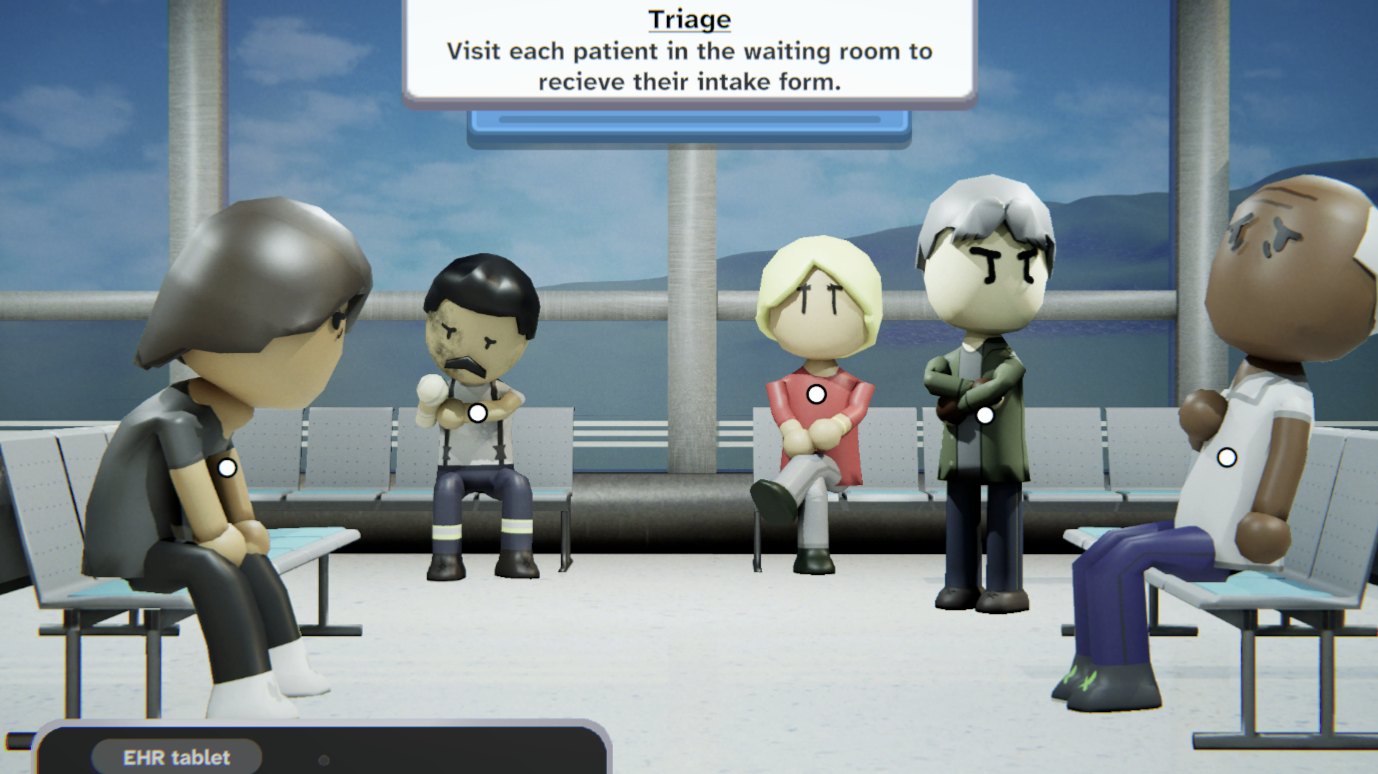
Nursing game: triage in the waiting room
07

Sim Escape: Digital Escape Rooms for Nursing

Year
2025 to 2026
Form
Two Unity escape-room games for clinical education
Role
Game designer; recruited and supervised the student developers; conducted the study
Partners
GMU Nursing (PI Dr. Yanika Kowitlawakul), UVA, VCU, VSGI

Can the urgency and puzzle structure of an escape room carry the reasoning of a clinical emergency?

Two games, one on acute myocardial infarction and one on increased intracranial pressure, in which medical-surgical nursing students work a deteriorating patient's case under the time pressure of an escape room, unlocking their way forward through puzzles built on the clinical content.

Funded by a roughly $20,000 4VA collaborative grant. I supported the proposal, led the game design, and recruited and directed the student developers, Alexander Scrivner (game artist) and Alex James (programmer).

OutcomeI conducted the classroom study in Spring 2026: 75 students played the myocardial infarction game and 52 the intracranial pressure game, and both groups improved from pre- to post-quiz. Co-presented as Sim Escape: Digital Games for Nursing Education, Serious Play Conference, Duke University (Aug 2026). Showcased in live demos at ARTS by George!, the College of Visual and Performing Arts' annual scholarship benefit.
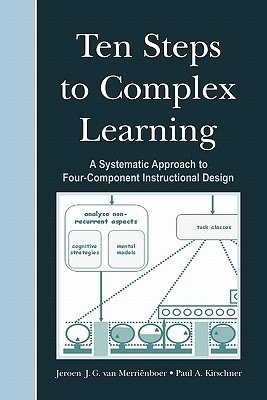
The design model I followed: van Merriënboer and Kirschner, Ten Steps to Complex Learning. Jeroen van Merriënboer served on my dissertation committee.
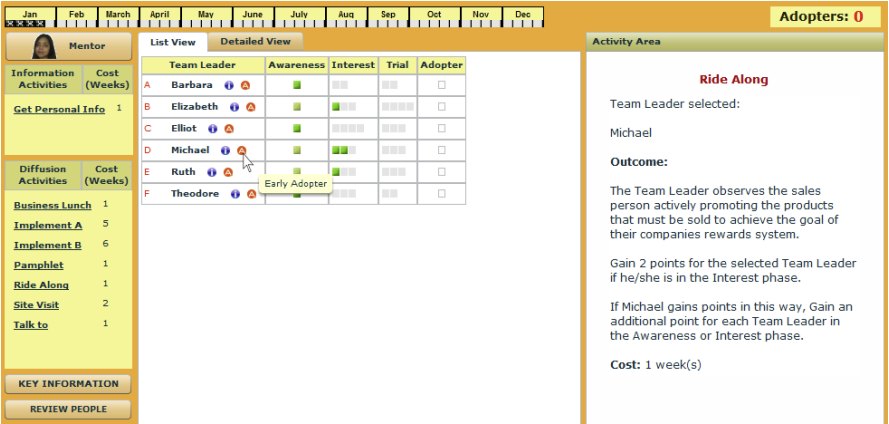
The redesigned game: a scenario in play, with each team leader's progress toward adoption
08

Diffusion Simulation Game (Redesign)

Year
2012, doctoral dissertation, Indiana University
Form
Online simulation game
Role
Designer and developer of the redesign
Framework
4C/ID, Ten Steps to Complex Learning

How do you redesign a complex simulation so players build the strategy step by step, instead of being dropped into the deep end?

The Diffusion Simulation Game casts the player as a change agent persuading the people in an organization to adopt an innovation, moving each person from awareness to interest, trial, and adoption. For my dissertation, Designing an Educational Game with Ten Steps to Complex Learning, I redesigned it with the four-component instructional design model: eight new scenarios grouped into three task classes of increasing complexity, from persuading a single student to persuading an entire fire department, with an in-game mentor and lessons whose support fades as the player gains skill.

I developed the redesign across six rounds of formative research, testing each version with players and revising it. The study found the model strong for sequencing tasks and fading support, but short on guidance for delivering information inside a game and for handling misconceptions that contradict what players experience in play. The project joined my doctoral major (Instructional Systems Technology) and minor (Interactive Media) in a single work.

OutcomeEnfield, Myers, Lara and Frick (2012), Simulation & Gaming 43(2); Kwon, Lara and Enfield (2013), Journal of Educational Technology Systems; presentations at AECT, AERA, and Games, Learning & Society.
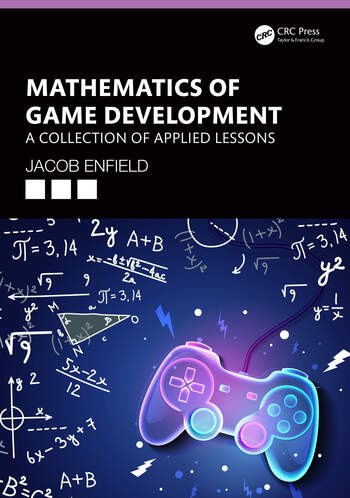
CRC Press, 2024
CRC Press, 2024
09

Mathematics of Game Development

Year
2024
Form
Book with companion Unity projects (CRC Press / Taylor & Francis, 258 pp.)
Role
Author
Subtitle
A Collection of Applied Lessons

What if the mathematics were learned the way game developers actually meet it: inside a project that doesn't work until the math does?

Each lesson pairs a mathematical concept with a Unity project in C#, so the reader builds a working game mechanic and the math is the reason it works. It is half mathematics and half applied coding by design.

The book grew out of my experimental Mathematics of Game Development course and the syllabus I wrote for it within George Mason's proposed PhD in Serious Games.

OutcomeBasis of invited talks to IGDA Washington DC (2024) and to a GMU Math Circle for middle and high school students, where I used a 2D engine I built in JavaScript to explore collision detection.
10

Earlier work and recognition

bodyguard

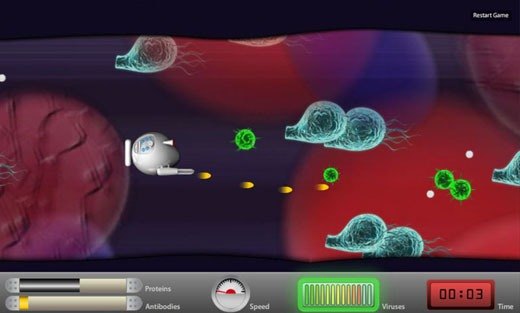
Bodyguard: A Medical Action Game

2010. Winner, MultiVisions Communications Conference Media Showcase (Open Game Project); finalist, PlayExpo, University of Wisconsin-Whitewater.

smuthie

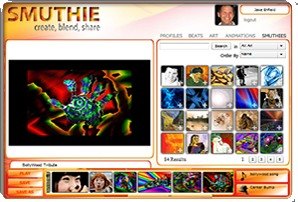
Smuthie.com: Create, Blend, Share

2010. An experiment in social collaboration through art, music, and animation. Finalist, PlayExpo and the IU Johnson Center IDEA Competition.

growth

Growth & Decay

2011 Global Game Jam, Miami University. Venture Capital Award.

varx

VARJAM and immersive media at CSUN

Led VARJAM (2017), CSUN's first VR and AR competition: workshops on photospheres, 360 video, Unity, and AR, then ten student teams from across majors judged by industry professionals from studios including Sony Pictures and Google. Also built and taught Virtual Reality Production (Maya, Unity, C#), organized the VARx faculty exploration (2016 to 2017), ran the annual Multimedia Showcase (2014 to 2017), and chaired the Interactive Media and Emerging Technologies division of the Broadcast Education Association (2015-16).